NHsolution

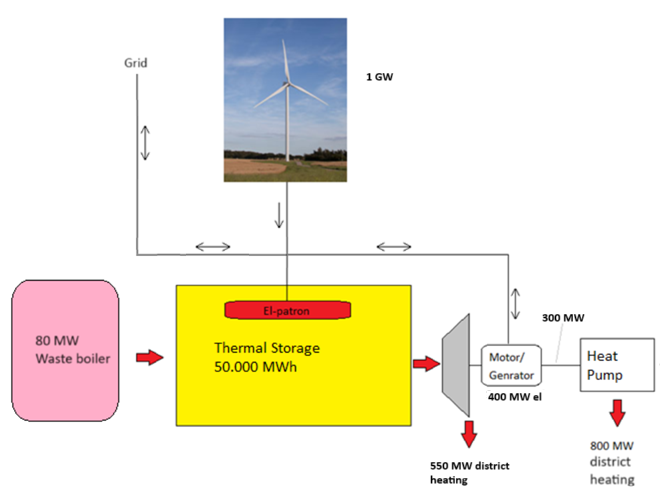
The power plant now operates in conjunction with an offshore wind farm located off the coast of Copenhagen. The offshore wind farm is connected to the power plant’s grid connection. When wind is producing and other renewables on Zealand are supplying electricity, the power plant remains idle, and renewable energy covers the electricity demand on Zealand. A waste-fired boiler heats the thermal battery, and surplus electricity also charges the battery. As renewable generation decreases, the power plant is brought online and supplies electricity to the grid using the stored thermal energy. The plant’s waste heat takes over district heating production from the heat pump, thereby reducing the pump’s electricity consumption.
This dualistic production setup ensures that renewable electricity always creates value — first through the heat pump, and later by being effectively recovered via the thermal battery, with the waste heat acting as a catalyst.
When renewable electricity is available, it always has full access to supply the grid. Any surplus powers the heat pump, and the remaining excess is stored as heat in the battery.
And when there is a shortage of electricity, the stored surplus power and the energy from waste can deliver a significant amount of electricity precisely when it is needed most.
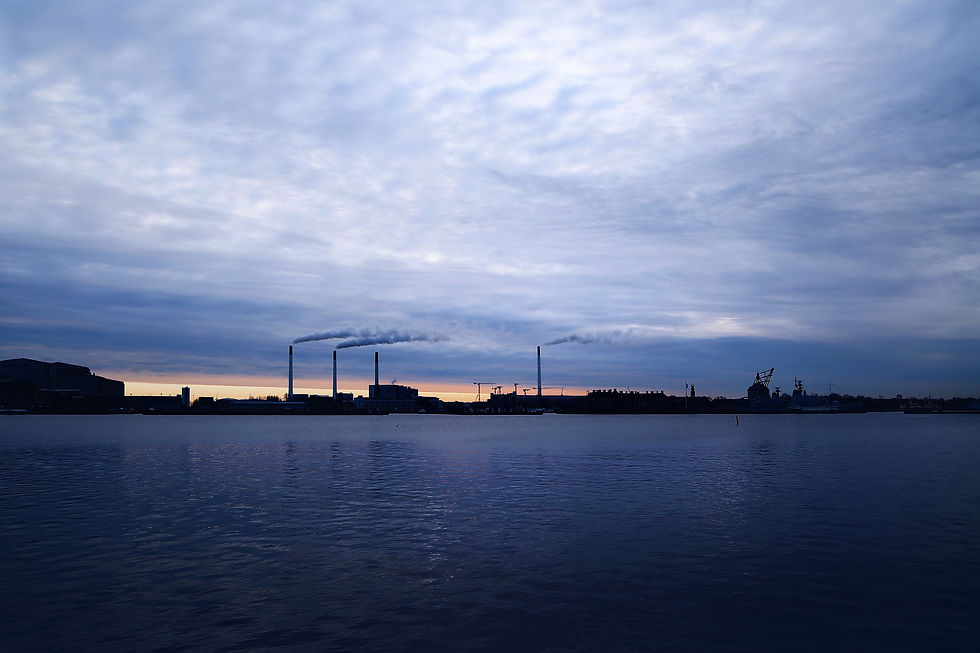
The central power plant Amagerværket, located on a dedicated power plant peninsula just outside Copenhagen, serves as a key example.
Before it was converted to biomass, the largest coal-fired unit at Amagerværket was capable of producing 400 MW of electricity, and the entire infrastructure — including high-voltage lines connecting to the main Zealand transmission grid — remains in place.
This system configuration, with a thermal battery (storage), see:
The old central coal-fired power plant converted to operate dualistically, both on the fuel side and on the output side.
Ready for a future with sustainable energy?
Complete the form and let Nhsolution help


England
The country with a particularly large public support for continuous electricity production really undermines the integration of renewable energy.


Ukraine
A country at war where central power generation units are vulnerable to missiles and bombs. The dualistic production system can provide the country with the necessary power supply.